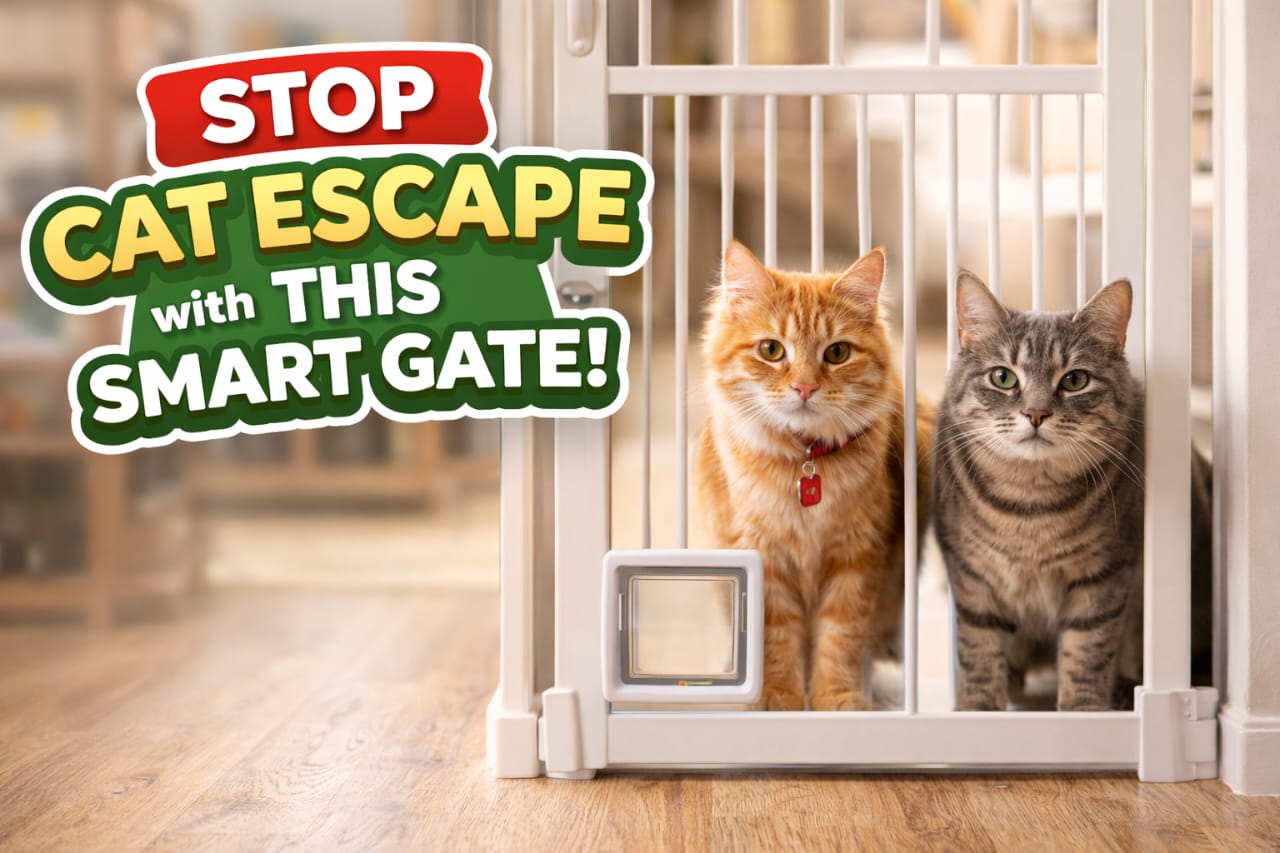
If you’ve ever tried to open your front door and suddenly found your cat making a lightning-fast dash outside, you already know how stressful it can be. Cats are smart, curious, and incredibly quick. One small mistake is enough for them to escape, and once they’re out, panic sets in for the owner. This is exactly why more cat owners are turning to smart gate solutions instead of relying on basic barriers.
A smart gate isn’t about locking your cat in. It’s about creating clear, safe boundaries that work with how cats actually behave. When done right, it protects your cat, your home, and your peace of mind.
Why Cats Are So Determined to Escape
Cats don’t try to escape because they dislike their homes. In most cases, escape behavior is driven by curiosity, instinct, or boredom. Outdoor smells, moving objects, birds, or simply fresh air can trigger the urge to explore.
Some cats are more persistent than others. Younger cats, unneutered cats, and highly energetic breeds are especially prone to escape attempts. Indoor only cats may also test boundaries if they feel under stimulated.
Understanding this helps shift the mindset from punishment to prevention. The goal isn’t to stop curiosity it’s to guide it safely.
What Makes a Smart Gate Different
A smart gate is not the same as a standard pet gate. Most regular gates are designed for dogs, not cats. Cats can climb them, squeeze through bars, or jump straight over them.
Smart gates are designed with feline behavior in mind. They are usually taller, sturdier, and harder to climb. Many use smooth surfaces that give cats nothing to grip. Others extend closer to the ceiling or door frame, eliminating jump points.
Some advanced setups also allow smart cat doors to be installed within the gate, adding controlled access instead of full restriction.
How Smart Gates Actually Prevent Escapes
What makes smart gates effective is their layered approach. Instead of relying on one feature, they combine multiple escape proof elements.
Height prevents jumping. Smooth materials prevent climbing. Secure locks prevent paw pushing. Tight spacing prevents squeezing through gaps.
Cats are excellent problem solvers, but when all these factors work together, most cats quickly realize the barrier is not worth challenging. Over time, escape attempts reduce dramatically.
Best Places to Use a Smart Gate
Not every doorway needs a smart gate. Strategic placement makes a huge difference.
Front doors are the most obvious location. This is where most escapes happen during deliveries or quick exits. Balcony and terrace doors are another high-risk area, especially in apartments.
Staircases leading to exit doors are also ideal spots. A smart gate placed here creates a buffer zone, giving you time to react without stress.
The idea is to control transition spaces, not restrict your cat’s entire home.
Smart Gates and Smart Cat Doors: A Powerful Combination
For many homes, the most effective setup is a smart gate combined with a microchip activated cat door. These doors only open for registered cats, preventing escapes and blocking access for stray animals.
This works especially well in multi-pet households or homes where cats are allowed in some areas but not others. It gives freedom without sacrificing safety.
Once cats learn how the system works, they adapt quickly and use it confidently.
Choosing the Right Smart Gate for Your Home
When selecting a smart gate, focus on function before looks.
Height is critical. A short gate is almost useless for agile cats. Materials matter too avoid fabric mesh or wide bars.
Look for strong locking mechanisms that can’t be opened by paws. Adjustable designs are helpful for uneven doorways or wide openings.
If you plan to add a smart cat door later, make sure the gate supports it.
Mistakes That Make Gates Fail

Even the best smart gate can fail if installed incorrectly. Leaving gaps near walls, placing furniture nearby, or forgetting to lock the gate makes it easier for cats to bypass.
Another common mistake is inconsistency. If the gate is sometimes enforced and sometimes ignored, cats will keep testing it.
Smart gates work best when rules are clear and consistent every day.
Reducing Escape Behavior Through Enrichment
A smart gate works even better when your cat’s needs are fully met indoors. Cats that are bored or under stimulated are far more likely to obsess over escaping.
Daily playtime, climbing shelves, window perches, and interactive toys make a huge difference. Some owners also create safe outdoor experiences using enclosed balconies or catios.
When cats feel mentally and physically satisfied, escape attempts naturally decline.
Living with a Smart Gate Day to Day
Most cat owners worry that their cats will hate smart gates. In reality, cats adapt surprisingly fast. Initial curiosity fades once they understand the boundary is permanent.
For humans, daily life becomes easier. You can answer the door, bring in groceries, or ventilate rooms without fear.
After a while, the gate blends into the home and stops feeling like a barrier.
Is a Smart Gate Worth It?
From personal experience and observation, smart gates are absolutely worth the investment. Escaped cats face traffic, fights, disease, and the risk of never returning home.
Compared to emergency vet visits, search efforts, and emotional stress, a smart gate is a small price to pay for long-term safety.
Many owners who install one say the same thing: they wish they had done it sooner.
Conclusion
Stopping cat escapes isn’t about control, it’s about protection. Smart gates offer a practical, humane solution that respects your cat’s instincts while keeping them safe. When combined with proper placement, enrichment, and consistency, they create a secure home environment without limiting freedom.
For cat owners tired of constant worry and near-miss escapes, a smart gate isn’t just helpful it’s a game-changer.
Is there a pet gate that cats can’t jump over?
Yes, There many gate and barrier that your cat can’t jump over. Also smart gate or sensor available in market that ringing when cat across the bondries.