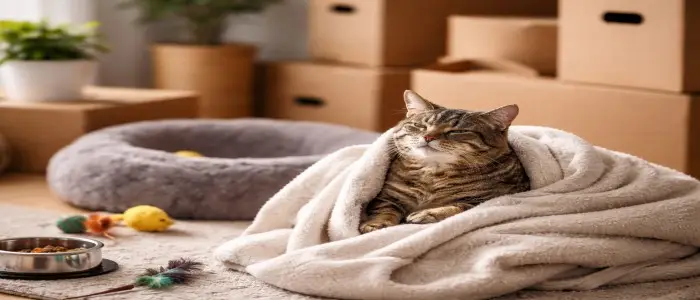
Moving to a new home is a big change, not only for humans but also for cats. Cats are very
sensitive to their surroundings, and even small changes can make them feel unsafe. New smells,
unfamiliar rooms, strange noises, and a broken routine often lead to cat stress after moving.
Many pet owners notice their cat hiding, eating less, or acting nervous.
The good news is that with the right care and patience, you can calm a stressed cat after
moving and help them feel secure again. This guide shares simple, safe, and proven tips to
reduce cat anxiety after moving.
How to Calm a Stressed Cat After Moving
Cats feel stressed because their territory suddenly changes. Below are the most effective ways to
help a stressed cat after moving and make the transition easier.
Understand Why Cats Get Stressed After Moving
Understanding the cause of stress helps you support your cat more effectively. Sometimes, unexpected activities we perform during moving. these activities caused of stress.
New Smells and Sounds
Cats rely heavily on scent. A new home smells unfamiliar, which can instantly make them
anxious and alert. Also, high noise, like a horn and the sound of other things, causes stress
Change in Routine
Feeding times, sleeping spots, and play routines often change during a move. This disruption
increases cat anxiety after moving.
Fear of the Unknown
New rooms, corners, and even furniture can feel threatening, causing your cat to hide or act
differently.
Common Signs of Stress in Cats After Moving
It is normal to see these behaviors after relocation:
- Hiding for long periods
- Eating or drinking less
- Loud or excessive meowing
- Being jumpy or scared
- Litter box problems
- Increased scratching
These are common signs of cat stress after moving, and most improve with time and care.
Create a Safe Space for Your Cat
One of the best ways to comfort a cat in a new home is by giving them a quiet, safe area. Give those male that cat like to eat. After comfort, space food is the most important factor
Set Up a Safe “Cat Room”
Choose a calm room and place:
- Food and water bowls
- A clean litter box
- Soft bedding or blanket
- Favorite toys
- A scratching post
This room becomes your cat’s comfort zone during the first few days.
Maintain a Consistent Daily Routine
Routine helps reduce cat stress after moving more than anything else.
Feed at Regular Times
Try to feed your cat at the same time they were used to before the move.
Schedule Daily Playtime
Gentle play sessions reduce anxiety and help your cat gain confidence in the new environment.
Also, some other factor like.
Letting your cat explore everything at once can be overwhelming. Start with one room. Once your cat feels comfortable, slowly allow access to other rooms.Placing treats in new areas helps your cat associate the new home with something positive.
Natural Ways to Calm a Stressed Cat
You can reduce anxiety without medication using gentle methods. Pheromone diffusers like Feliway help mimic comforting scents and relax your cat naturally. Sit quietly and let your cat come to you. Soft petting builds trust and reassurance. Cats like to play in open areas or on the ground. There is cat grass that helps to calm in stress mode.
How Long Does It Take for a Cat to Adjust After Moving?
Every cat adjusts at their own pace.
- Some cats feel comfortable in 2–3 days
- Shy or sensitive cats may take 1–2 weeks
- Very anxious cats can take a month or longer
Patience is essential. Never force interaction.
What to Do If Your Cat Is Not Eating After Moving
A cat not eating after moving is very common. Warm food smells stronger and encourages appetite. Use your cat’s favorite wet food or treats temporarily. Make sure the space is quiet and away from noise.
Extra Tips to Help a Stressed Cat After Moving
Keep doors and windows closed to prevent escape
- Avoid visitors for the first few days
- Reduce clutter near your cat’s space
- Speak softly and calmly
- Never punish stress-related behavior
One important point is. f your cat refuses food for more than 24–36 hours, consult a veterinarian.
Conclusion
Moving to a new home can be stressful for cats, but with patience and the right approach,you
can calm a stressed cat after moving successfully. Creating a safe space, maintaining routine,
introducing the home slowly, and using natural calming methods all help reduce cat anxiety
after moving. Every cat needs time, but with love and consistency, your cat will soon feel
confident and comfortable in their new home.